- Environmental Pressures and Opportunities for B2B Enterprises
Under the global “carbon neutrality” wave, B2B enterprises (especially foreign trade export-oriented enterprises) face two major environmental demands: first, policy compliance (many countries have introduced mandatory regulations on environmentally friendly packaging), and second, customer needs (80% of multinational enterprises take “green packaging” as a supplier screening standard). Eco-friendly cartons can not only help enterprises avoid policy risks but also become a differentiated competitive advantage.
- Core Technologies and Trends of Eco-Friendly Cartons
Application of Recyclable Materials
Increased proportion of recycled paper: Currently, the proportion of recycled paper in mainstream eco-friendly cartons reaches 70%-90%, and some high-end products can achieve 100% recycling (through deinking and 纤维化 technology, the strength is equivalent to virgin paper);
Substitution of bio-based materials: Use renewable plant fibers such as bamboo pulp, bagasse, and wheat straw, which save 30% of wood resources compared with traditional wood pulp paper and increase the degradation rate by 50%.
Breakthrough in Degradable Technology
Fully biodegradable cartons: Add PBAT (Polybutylene Adipate Terephthalate) and PLA (Polylactic Acid) components, which can be completely degraded in the natural environment within 3-6 months without white pollution;
Water-soluble cartons: For the food and electronics industries, use water-soluble paper to make inner packaging, which dissolves in water without manual disassembly, reducing waste.
Circular Economy Model
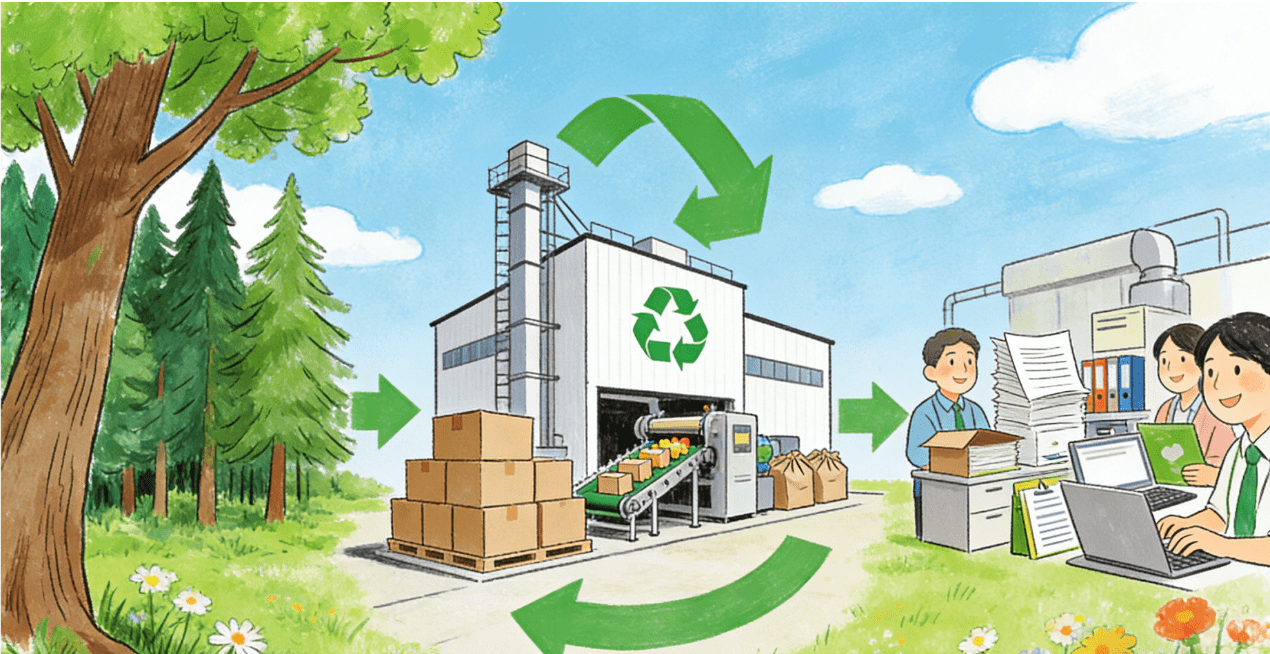
Closed-loop recycling system: Enterprises cooperate with logistics providers to establish a carton recycling network. The recycled cartons are disinfected and reshaped for reuse, reducing the carbon emission per carton by 60%;
Leasing and sharing model: For high-frequency and standardized transportation scenarios (such as cross-border e-commerce FBA warehouse shipments), launch carton leasing services. Enterprises pay by usage times, reducing one-time procurement costs.
III. Steps for B2B Enterprises to Implement Green Packaging
Compliance first: Select environmental standards according to target market regulations (such as EU EN 13432 biodegradable standard, US ASTM D6400 standard);
Cost balance: Initially adopt a mixed scheme of “recycled paper + partial bio-based materials”, which is 20%-30% lower in cost than fully biodegradable cartons;
Brand communication: Print “recyclable” and “biodegradable” logos on cartons, and provide supporting environmental certification reports to enhance customer trust.