Contact / Inquiry
Contact Hongchuang Sales for OEM/ODM quotation. Please include size and intended use for faster response.
Or email: sales@jhongtong.com.cn
Contact Hongchuang Sales for OEM/ODM quotation. Please include size and intended use for faster response.
Or email: sales@jhongtong.com.cn

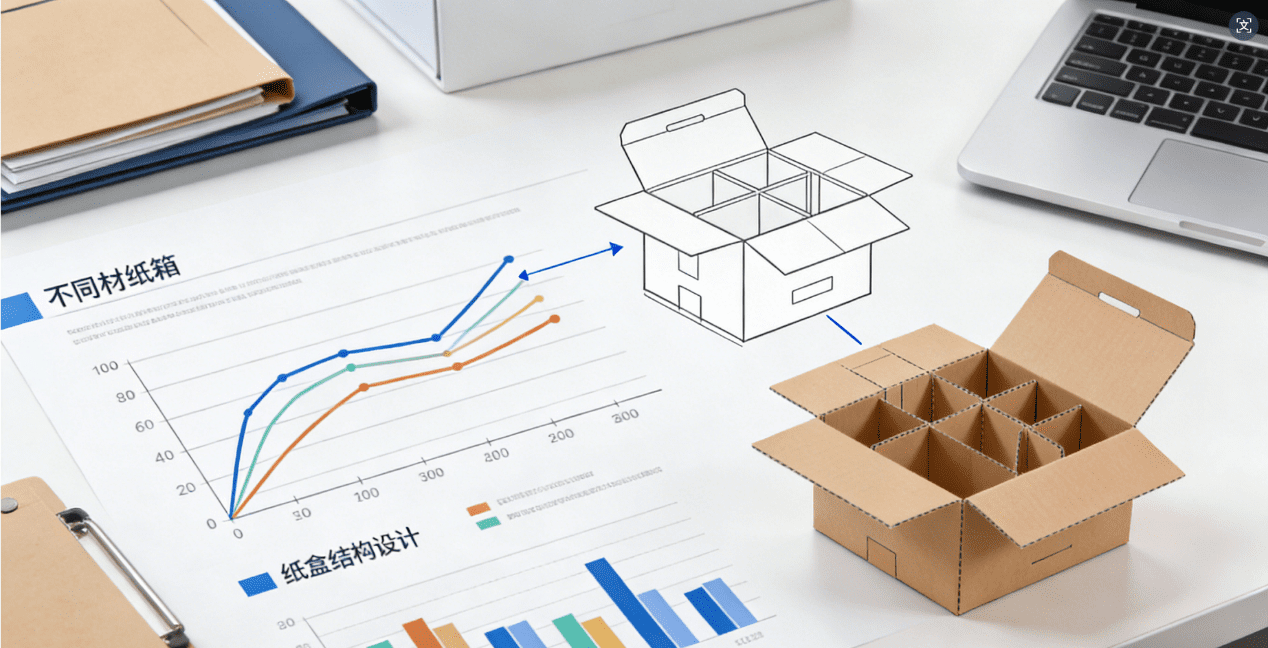

For cross-border e-commerce sellers and foreign trade wholesalers, cartons, as high-frequency consumables, account for 15%-20% of the total logistics cost. Against the background of intensified homogeneous competition, how to achieve cost optimization without reducing protection performance has become the key to improving profit margins. This article provides implementable cost reduction strategies from three dimensions: materials, design, and procurement.
Material Optimization: Precisely Match Grammage and Strength
Avoid “over-packaging”: Through cargo weight testing, reduce the grammage of carton face paper from 250g/㎡ to 220g/㎡, reducing the unit carton cost by 8% (while maintaining the same compressive strength);
Mixed material application: Use recycled paper for the inner layer (30% lower cost than virgin paper) and virgin paper for the outer layer to ensure printing effect, reducing the comprehensive cost by 15%.
Structural Design: Reduce Consumable Waste
Integrated molding design: Eliminate redundant adhesive edges, reducing the paper usage per carton by 5%;
Standardized sizes: Customize carton sizes according to container/pallet specifications, increasing the loading rate by 12% and indirectly reducing transportation costs.
Procurement Model: Bulk + Long-Term Cooperation
Quarterly bulk procurement: 10%-15% lower unit price than single procurement, while locking in the risk of raw material price fluctuations;
Long-term framework agreement: Sign a 1-2 year cooperation agreement with suppliers to obtain value-added services such as free design and logistics subsidies.
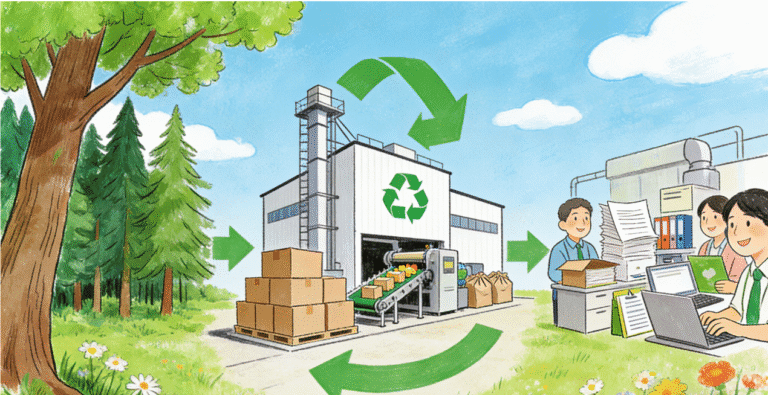
Recycling: Reduce Repeat Procurement Costs
Foldable recycling design: Cartons adopt a detachable structure, which can be folded and stored after recycling, with a reuse rate of 60% during return transportation, suitable for B2B circular order scenarios;
Leasing model: For high-value and high-frequency transportation cartons, adopt the “leasing + recycling” model, reducing the unit carton usage cost by 40%.
III. Cost Reduction Pitfall Reminders
Cost optimization shall not sacrifice compliance: For example, food-grade cartons cannot replace virgin paper with recycled paper;
Test before bulk production: New schemes need to undergo load-bearing and moisture-proof tests to avoid increased cargo damage rate due to cost reduction.